Last year, I was giving a little treat to my class at the Halloween Midterm.
I bought some lollipops, wrapped a tissue around it and secured it with an elastic band.
Then I drew on two eyes and a mouth.
It was a very simple idea but the children liked them!
Wednesday, 25 October 2017
Tuesday, 24 October 2017
Books Worth a Look #3 'The City of Ember'
This is the third post in Books Worth a Look. (I have purchased these books myself and do not receive sponsorship/freebies for reviewing them!)
Next up is 'The City of Ember' by Jeanne DuPrau. It has been made into a movie aswell so it could be a good one to read with the children and then compare and contrast the film.
I had never come across this book before until the summer when I ordered it online. I feel it is most suitable for the senior end of the school. (It is important to note that the main character has lost her parents and also loses her grandmother during the story).
Theme/Overview
The book is set in the fictional city of Ember which has been built to be self sufficient from any outside world. However, the city is now running out of supplies and the generator is having more and more failures as the city is plunged into darkness repeatedly. People are becoming more anxious about the future. The main characters need to try and find an escape route to see what lies beyond the city boundaries.
Activities
- Science: explore Electricity and how it works
Check out http://www.primaryscience.ie/ for experiments based on Electricity.
This link has some videos that are worth a look.
http://www.primaryscience.ie/activities_activity_movies.php
Discuss ways to conserve electricity and different ways to generate electricity.
Explore the different sources of light, both natural and artificial.
- Art: create city scapes of buildings.
I really like these ones make using newspaper.
![]() |
| Image Source |
- Visualisation: This book would be good to challenge children to visualise it in their heads and illustrate it. They could contrast 'the City of Ember' and the land they arrive in.
- Get creative and plan their own city (Maths and Art). In groups they could construct a city using a variety of materials
- Pack your bags! Discuss what treasured belongings you would bring if you had to move to a new home.
Check out the other Books Worth a Look posts:
Monday, 9 October 2017
Fun with the 5 Senses
This month in Science my class were learning about the five senses. Here are some of the activities we did based on the Senses, which I spread over a few lessons.
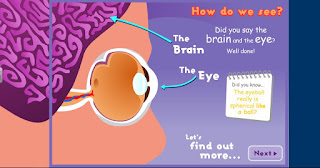
- Structure of the sense organs
| Image source |
Experiments/Activities
Eye
Which is your dominant eye?Where is your blind spot?
Hearing
Identify the sound
Smell
What's that smell?Taste
Blind tasting with and without the sense of smellTouch
- Feely bag (make it trickier by putting a sock or glove on their hand or use different parts of the body to feel the object to show that our sense of touch is less sensitive on our arm than our finger tips etc. )
- Trace a message on an arm (and guess what they traced)
- Finger prints (chat about how each finger print is individual)
Find this experiment and more by clicking here.
Sense poetry
I gave a different setting to each child. They had to use the formation of a sense poem to describe the setting without mentioning it. The rest of the class had to guess the setting.
Examples: farmyard, seaside, woods, school, cinema, restaurant
- Discussion/appreciation of not having use of one of your senses
For example, we looked at how Braille is used for those who are visually impaired.
Thursday, 5 October 2017
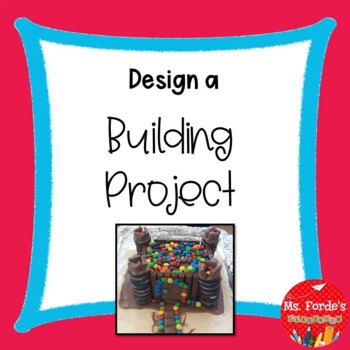
Building Project
Following on from the students' enthusiasm and engagement with the 'Bridges Project' last year, we did a 'Building Project' this year.
I did it in a similar way to the bridge project. First of all, we looked at different types of buildings all around the world and how they have changed over the years.
Then we looked at the types of materials that are used and why (for example why we use blocks in Ireland compared to mud huts in Africa).
We also looked at famous buildings around the world to give the children some inspiration and ideas.
The children then had to complete their project booklet and construct a building of their own!

Take a look at a few of the finished projects.
The students presented them to the whole school after presenting them to the class.
Science: Materials (and how they can be used in construction)
Art: Construction
English: Oral Language, Procedural Writing
Geography: Homes Around the World
History: Change of Buildings over time (contrast photos of your locality: now versus long ago)
SPHE: Differences
I did it in a similar way to the bridge project. First of all, we looked at different types of buildings all around the world and how they have changed over the years.
Then we looked at the types of materials that are used and why (for example why we use blocks in Ireland compared to mud huts in Africa).
We also looked at famous buildings around the world to give the children some inspiration and ideas.
The children then had to complete their project booklet and construct a building of their own!
Take a look at a few of the finished projects.
The students presented them to the whole school after presenting them to the class.
Integration Ideas
Science: Materials (and how they can be used in construction)
Art: Construction
English: Oral Language, Procedural Writing
Geography: Homes Around the World
History: Change of Buildings over time (contrast photos of your locality: now versus long ago)
SPHE: Differences
Other Project Ideas:
Bridge Project
Monday, 2 October 2017
3D Hot Air Balloons
Last year, I did this art lesson with my class but this year when I decided to do it again I had forgotten how exactly I did it. So I am going to jot it down here for future reference!
Materials
- Various Coloured paper-A4
- Hot Air balloon template or blank page
- Scissors
- Pritt Stick
- Rulers
- Pencils
How to make them them
First off, I gave each child one coloured page. (Giving each child in a group a different colour will help to divide them out easily after)Placing it portrait in front of them, they marked 1.5cm intervals across the page using their ruler and pencils.
Then they cut their coloured page along the intervals, leaving them with strips 1.5cm in width.
The children can then share out the coloured paper so they have a mixture of coloured strips.
I gave my class a hot air balloon template but the children can also draw their own.
Fold about 2cm of the strip on each side. Put Pritt stick on the folded part. Place the part with Pritt stick on the edge of the hot air balloon and on the opposite side of the balloon.
Continue with the next strip until you have made you way around the balloon, placing one side north of the previous strip and one side South.
Decorate the hot air balloon with people, surrounding clouds etc.

Tips
Try to put strips right beside each other to avoid gaps.
Ensure children fold the edges of the strips inwards rather than outwards.
Sunday, 24 September 2017
Books Worth a Look #2 'Pax'
This is the second in a series of blog posts on some good books that I have come across while teaching a variety of classes. (I have purchased these books myself and do not receive sponsorship/freebies for reviewing them!)
The second book is 'Pax', a new-ish book to me. It is one that I really enjoyed reading myself. It is written by Sara Pennypacker and has lovely illustrations by Jon Klassen.
Theme/Overview
The main theme of this book is friendship. It is about two friends who are separated, it just so happens that one of them is a boy (Peter) and one is a fox (Pax).In order to be reunited, both of them face many obstacles including war (yet war is not the main focus of the book). The book explores how true friendships can overcome even the most difficult and dangerous situations.
I particularly liked how it is written from perspective of both Peter and Pax, in alternate chapters. Personally, I would do this with a senior class as it does refer to war from time to time. It is important to note it does deal with the loss of a parent so may not be suitable to do if a child has experienced such a loss.
Activities/Ideas
- Research foxes- create a report piece of writing (click on image to get blank templates)
- Use the book as a stimulus to explore the theme of war (book does not specify which war)
- Fill a backpack (Peter brought some useful items and treasured possessions with him), ask the children what they would bring. They could draw a backpack with their chosen items inside.
![]() |
| Image Source |
- Visualisations: This story lends itself nicely to working on the comprehension strategy of visualisation.
- Traits of a good friend: Discuss the important traits of a good friend.
- Friendship recipe: similar to the idea above, choose the most important traits of friendship.
![]() |
| Image Source |
- My pet: Discuss or complete a project on their pets and their favourite things about them. If some children don't have pets try the next activity.
- If I could have any pet it would be.....
- Read the poem 'The Dentist and the Crocodile' by Roald Dahl
- Do some art inspired by foxes!
![]() |
| Image Source |
![]() |
| Image Source |
Check out the other Books Worth a Look posts:
Wednesday, 20 September 2017
Jenga Blocks in the Classroom
I purchased this set of Jenga blocks for only €4 in Tesco's last week.
I try to have a few games on each set, to get extra value for money! For example I have multiplication on one side of the blocks and a division set on the other.
Here are a few ways I like to use them in station teaching or as an early finisher activity.
I try to have a few games on each set, to get extra value for money! For example I have multiplication on one side of the blocks and a division set on the other.
Here are a few ways I like to use them in station teaching or as an early finisher activity.
Maths
- Multiplication and division tables (useful to leave a multiplication square at the station so they can check answers)
- Addition and Subtraction tables for younger classes
- Fractions: 1/4 of 20
- Percentages: 30% of 10
- Decimals: 0.1 of 20
- Number Sequences or patterns: 12, ____, 14 or 3,6,9, ____
- Rounding numbers to nearest 10, 100, 1000
Gaeilge
Write the root of the verbs on the blocks and the children can change the verb to one of the following:
- Aimsir Chaite
- Aimsir Láithreach
- Aimsir Fháistineach
- Question form/negative of verb
English
- Prefix/Suffix
Add a prefix/suffix to each block and the children have to give a word that contains the prefix or suffix
- Phonics
Put letters and letter blends (e.g. th) on the blocks and the children have to say a word with that letter sound
- Conversation Starters (Oral Language)
![]() |
| Image Source |
Ways to play
Remove one piece at a time and keep it of you get the answer correct. When the tower collapses, whoever has the most blocks is the winner.
OR
Place each piece on top after you answer the question. Use a whiteboard or paper to record correct answers.
Feel free to add other ideas for using Jenga blocks in the comments below.
Subscribe to:
Posts (Atom)