Showing posts with label English. Show all posts

Monday, 23 November 2020

Report Writing Animals (Toucans)

Over the past few few weeks, we have been exploring Report Writing.  Our English reading texts were also based on this genre, as it provided examples of Report Writing for the children.

As we read the texts, we identified the information that was provided about the various animals: their appearance, habitat, what it eats, predators and some interesting facts.


We decided to explore toucans in more detail.  I sourced some short video clips to show the children.  This helped us to identify more about their appearance and habitat.  

I modelled how to chose the important information about toucans and we had a shared writing lesson to make a plan for writing about toucans under each of the headings. 

The following week, the children wrote their piece of Report Writing about toucans, using writing frames.  They also created some fabulous art to go with it.


The following resources were used to support the class, when developing their Report Writing skills.

Display Posters

Planning Templates


Self Assessment Checklist Freebie


Thursday, 16 January 2020

Spelling Tips and Tricks

Earlier this school year, I had a post on some ways I approach spellings with my students.  Here is an overview of how I have worked on improving spellings with the children.


I started by asking the children to do a free writing sample (can be based on any topic) to ascertain their spelling strengths and weaknesses.  I also assessed their knowledge of how to spell the 72 tricky words from the Jolly Phonics programme.

Following this, I made a list of their spelling strengths so that we wouldn't waste valuable time on spellings they already knew.  Instead we focused on any tricky words they didn't know.  Following this, we began Brendan Culligan's Corewords List, using dictation sentences. 


Each week the children also choose 1 or 2 words they want to learn to spell themselves, giving them ownership of their learning. Over a 5 week period, one child learned how to spell supercalifragilisticexpialidocious by segmenting it into manageable chunks!

Strategies we use throughout the week include:
A sample worksheet using some strategies
  • magnetic letters
  • finding letter strings
  • finding words within the word
  • using mnemonics to remember the word
  • dictation (using the spellings in context)
  • making their own sentences
  • writing in sand
  • tracing on their palm or on another child's back


One of their favourites!

These posters are used as prompts for the children and they are also encouraged to come up with their own strategies to remember words.  This is an example of what one student did to remember her cousin's name, without any prompt from me! (Isla: I see lego apples!)


Other resources that I find very useful are:

Commoncoresheets.com
This offers many types of individualised worksheets for your students to practice their spellings.

Dyslexia Daily YouTube
Videos for tricky words:


Click here to read more on spellings.

Feel free to add other ideas below!

Monday, 9 September 2019

Recount Writing Resources

I use the following resources to structure how I teach the genre of recount writing with my class.
This year, I am working as a Special Education Teacher but many of the templates will be useful to help children to sequence their ideas before writing.  
Simply click on each image below to access the resource.

Display Posters 

The poster set includes how to structure a recount, the types of recounts and some useful connectives they can incorporate into their writing.  I display this in the classroom for the students and add their samples of recount writing to the display board.


Planning Templates

There are 4 different planning templates included to suit the needs of the children, giving them the opportunity to get their thoughts together before writing a recount.  


Checklists

These can be downloaded for free on my TPT store, by clicking on the image below.  I usually stick them into the copies and the children can use them to self-assess any piece of recount writing they complete.


Recount Writing can be linked nicely to a classroom timeline of events that occurred throughout the year.  Read more about this here.


Check out other posts on writing genres by clicking the link below.

Thursday, 29 November 2018

Magnetic Calendar


I bought this magnetic calendar in Smyths recently to use with some of the children I work with in. (This is NOT an ad, I purchased the product myself for under €20!) It comes with 82 magnets.

Personally, I am going to use with one particular child to develop a sense of time on a daily basis. There are lots of other ways you can integrate it into the classroom, particularly in the Infant level, or as a daily activity to do with an SNA or independently.  I have listed some ideas of how you can really get your moneys-worth with this resource! Feel free to add other ideas in the comments below.


Ordering the days/months of the year (Maths)

All of the months and days are provided and it would be a nice hands on activity to put them in order. You could separate the school days from the weekend. The months could be matched to the correct season. 
If the child is good at putting them in order, you could remove one of the magnetic days/months and see if they can figure out which one is missing.

These magnetic tiles could also be used instead of writing answers, if fine motor skills is an issue.


Oral Language


There is such scope for oral language development with this resource. As the children become used to it, it could be used as a stimulus for recording a child being a weather forecaster. The child could also be recorded saying their news using the activities as a prompt. This would be particularly nice for children who have an iPad, as it creates a nice link with home, when they can see these videos.
It provides some lovely opportunities for vocabulary and language development, even the temperature monitor has a range of words to describe the weather. 

Writing

If you wish, it could be a visual cue for a writing activity as it provides a lot of the language for the children. I really like to used it on the book creator apps on the iPad, incorporating I.T. The children can take photos of the calendar when they have it completed and write a sentence or two underneath. They can also record this sentence using the microphone on the iPad (more Oral Language).

Image result for book creator app

Maths

The digit tiles can be used in so many ways for maths as an alternative to writing. Here are just a few ways I use them:


  • ordering numbers smallest to largest or largest to smallest
  • making a number that teacher calls out
  • the number before/the number after
  • addition/subtraction sums
  • reading numbers, 1, 2, 3 or 4 digit numbers


Emotions/Feelings (SPHE)

I really like the emoji faces that are included and they can be used to discuss feelings/emotions with the children. There is a spare one that the children can add other emotions. They could also draw their own 'happy' or 'sad' faces. Using these they could create sentences (orally, using I.T. or writing), such as I am happy when.........

Visual Timetable


The calendar includes lots of extra curricular activities but you can always add your own and use the 'Activities' part as a visual timetable for the child.


Whiteboard

The second part can be used as a whiteboard, if you lift off the clear film that holds the supplementary magnets. This is really useful for a child who finds it difficult to copy material from the board, as they can use the information on the daily calendar to write on the board underneath. I would put it on their table, but you could leave it hanging on the wall too.


Saturday, 22 September 2018

Classroom Timeline (Recount Writing)

Last year, I started a classroom timeline with the children.
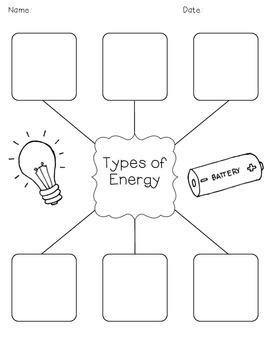
It tied in nicely in September with our Recount Writing genre.  We all planned out our piece of writing together first, with the children choosing 3 things they enjoyed doing in September.


I chose a few children to type up their work and we placed it under September with some pictures. It is a nice visual for them to remind them of all the work they have completed throughout the year.

We continued to add to it as the year progresses.

Monday, 5 March 2018

Oral Language Prompt Cards

I usually use these prompt cards during Station Teaching at an Oral Language Station. Generally, I will use one set per month to discuss a certain topic that might tie in with other subjects. However, they could also be used with the whole class.


It is a great way to practice turn taking skills with the children and also offers a great opportunity for quieter children to voice their opinion in a smaller group setting. I found the children really engaged well in the discussions and I had more time to listen to their ideas than in the whole class setting.

In Set A, there are 5 topics with 12 prompt cards in each. Set B also has 5 topics with 12 prompt cards. If you rather, you can also get all 10 in one bundle.

If you click on the images below you will be redirected to Teachers Pay Teachers where you can download them.


Tuesday, 24 October 2017

Books Worth a Look #3 'The City of Ember'


This is the third post in Books Worth a Look. (I have purchased these books myself and do not receive sponsorship/freebies for reviewing them!)


Next up is 'The City of Ember' by Jeanne DuPrau. It has been made into a movie aswell so it could be a good one to read with the children and then compare and contrast the film.


I had never come across this book before until the summer when I ordered it online. I feel it is most suitable for the senior end of the school. (It is important to note that the main character has lost her parents and also loses her grandmother during the story).


Theme/Overview
The book is set in the fictional city of Ember which has been built to be self sufficient from any outside world. However, the city is now running out of supplies and the generator is having more and more failures as the city is plunged into darkness repeatedly.  People are becoming more anxious about the future. The main characters need to try and find an escape route to see what lies beyond the city boundaries.

Activities

  • Science: explore Electricity and how it works

Check out http://www.primaryscience.ie/ for experiments based on Electricity.

This link has some videos that are worth a look.
http://www.primaryscience.ie/activities_activity_movies.php

Discuss ways to conserve electricity and different ways to generate electricity.

Explore the different sources of light, both natural and artificial.

  • Art: create city scapes of buildings.

I really like these ones make using newspaper.


Skyline
Image Source

  • Visualisation: This book would be good to challenge children to visualise it in their heads and illustrate it. They could contrast 'the City of Ember' and the land they arrive in.

  • Get creative and plan their own city (Maths and Art). In groups they could construct a city using a variety of materials

  • Pack your bags! Discuss what treasured belongings you would bring if you had to move to a new home.


Check out the other Books Worth a Look posts:

Sunday, 24 September 2017

Books Worth a Look #2 'Pax'


This is the second in a series of blog posts on some good books that I have come across while teaching a variety of classes. (I have purchased these books myself and do not receive sponsorship/freebies for reviewing them!)

The second book is 'Pax', a new-ish book to me. It is one that I really enjoyed reading myself. It is written by Sara Pennypacker and has lovely illustrations by Jon Klassen.


Theme/Overview


The main theme of this book is friendship. It is about two friends who are separated, it just so happens that one of them is a boy (Peter) and one is a fox (Pax).In order to be reunited, both of them face many obstacles including war (yet war is not the main focus of the book).  The book explores how true friendships can overcome even the most difficult and dangerous situations.

I particularly liked how it is written from perspective of both Peter and Pax, in alternate chapters. Personally, I would do this with a senior class as it does refer to war from time to time. It is important to note it does deal with the loss of a parent so may not be suitable to do if a child has experienced such a loss.


Activities/Ideas


  • Research foxes- create a report piece of writing (click on image to get blank templates)

  • Use the book as a stimulus to explore the theme of war (book does not specify which war)
  • Fill a backpack (Peter brought some useful items and treasured possessions with him), ask the children what they would bring. They could draw a backpack with their chosen items inside.
Image Source

  • Visualisations: This story lends itself nicely to working on the comprehension strategy of visualisation. 
  • Traits of a good friend: Discuss the important traits of a good friend.
  • Friendship recipe: similar to the idea above, choose the most important traits of friendship.
Image Source 

  • My pet: Discuss or complete a project on their pets and their favourite things about them. If some children don't have pets try the next activity.
  • If I could have any pet it would be.....
  • Read the poem 'The Dentist and the Crocodile' by Roald Dahl
  • Do some art inspired by foxes!
This Fox drawing lesson has been pretty popular, and so I thought I’d make an easy downloadable pdf file to help in the classroom. To create the look of my sample, have students draw on black paper, trace the lines with a black oil pastel, and then fill in as shown. • View and download Fox … Read More
Image Source
Newspaper Fox art project from Art Projects for Kids
Image Source


Check out the other Books Worth a Look posts:


Wednesday, 20 September 2017

Jenga Blocks in the Classroom

I purchased this set of Jenga blocks for only €4 in Tesco's last week.

I try to have a few games on each set, to get extra value for money! For example I have multiplication on one side of the blocks and a division set on the other.
Here are a few ways I like to use them in station teaching or as an early finisher activity.

 Maths

  • Multiplication and division tables (useful to leave a multiplication square at the station so they can check answers)
  • Addition and Subtraction tables for younger classes
  • Fractions: 1/4 of 20
  • Percentages: 30% of 10
  • Decimals: 0.1 of 20
  • Number Sequences or patterns: 12, ____, 14 or 3,6,9, ____
  • Rounding numbers to nearest 10, 100, 1000

Gaeilge

Write the root of the verbs on the blocks and the children can change the verb to one of the following:
  • Aimsir Chaite
  • Aimsir Láithreach
  • Aimsir Fháistineach
  • Question form/negative of verb


English

  • Prefix/Suffix
Add a prefix/suffix to each block and the children have to give a word that contains the prefix or suffix

  • Phonics 
Put letters and letter blends (e.g. th) on the blocks and the children have to say a word with that letter sound


  • Conversation Starters (Oral Language)
Image result for conversation jenga
Image Source


Ways to play

Remove one piece at a time and keep it of you get the answer correct. When the tower collapses, whoever has the most blocks is the winner.

OR

Place each piece on top after you answer the question. Use a whiteboard or paper to record correct answers.

Feel free to add other ideas for using Jenga blocks in the comments below.

Wednesday, 23 August 2017

Books Worth a Look #1 'The Dot'


This is the first in a series of blog posts on some good books that I have come across while teaching a variety of classes. (I have purchased these books myself and do not receive sponsorship/freebies for reviewing them!)


First up is 'The Dot' by Peter H. Reynolds which I will be doing with my new students on the first day of school as I introduce our classroom rules.


Image Source

Theme/Overview


The book is about a child struggling with an Art activity (but really I think it can be applicable to all subjects). It is about trying, even when it is difficult and you feel you can't do it...YET!  Even though it may be daunting or make us feel uneasy, making a start is important or as we say in Irish 'Tús maith leath na hoibre!' It ties in nicely with the idea of Growth Mindset. 

It encourages us to be creative in our learning and teaching (that there isn't just one way to do something) which is why I have chosen to read it on the first day back to school.


Activities/Ideas


These are just some ideas to pick and choose from that you could use alongside the book.
  • Discuss before reading the story what it feels like when faced with a new beginning or start (first day back to school, new pupil in the class etc.)


  • Read the story again but change it to another subject, for example Maths to show the children that the main idea of the story is applicable to more than just Art


  • The book could also be a stimulus for an Art lesson for the children to make their 'own mark'


  • Chat about how the children could make their mark this year (what they would like to achieve, what they would like to improve on) 


  • Do some Pointillism Art using dots and look at artist Seurat

  • Do some Kandinsky inspired 'Dot' Art
Kandinsky_Farbstudie-Quadrate
Image Source

  • create a class contract for the year to always try our best and 'make our mark'. Each child can sign their name beside their dot (perhaps their fingerprint).

  • Design a Growth Mindset Poster for displaying in the class. Have a look here at some examples or click the image for others.
Image Source

They now even have an International Dot Day which is the 15th September this year! More details can be found here where they have more ideas for the book.