Showing posts with label Oral Language. Show all posts

Thursday, 5 September 2019

Lollipop Stick Questions

I made these to use with some of the children I work with this year.

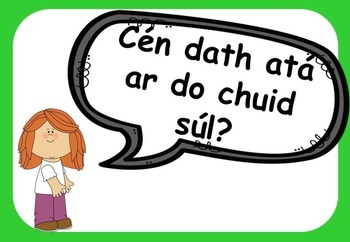
Rather than writing answers to questions based on a text, we will use these sometimes.  I made them thanks to posters from A Crucial Week, which I laminated and popped onto jumbo lollipop sticks.


I like to turn them upside down and allow the child to choose one.  I then use the question word to ask them a question based on the text we have read.  The children love to take on the role of the teacher and ask the questions too!

They could easily be used to discuss pictures too.


Example Questions:


- Who helped with the costumes?
- When was the concert on?
- Where do you think the children are?
- What is your favourite costume in the picture?
- Why do you like this costume?

Monday, 5 March 2018

Oral Language Prompt Cards

I usually use these prompt cards during Station Teaching at an Oral Language Station. Generally, I will use one set per month to discuss a certain topic that might tie in with other subjects. However, they could also be used with the whole class.


It is a great way to practice turn taking skills with the children and also offers a great opportunity for quieter children to voice their opinion in a smaller group setting. I found the children really engaged well in the discussions and I had more time to listen to their ideas than in the whole class setting.

In Set A, there are 5 topics with 12 prompt cards in each. Set B also has 5 topics with 12 prompt cards. If you rather, you can also get all 10 in one bundle.

If you click on the images below you will be redirected to Teachers Pay Teachers where you can download them.


Friday, 18 August 2017

Gaeilge Mé Féin Stations/Activities

In another post I have outlined how I approached and structured Gaeilge Station Teaching last year. 
Here are some ideas for doing stations based on the theme of Mé Féin.

Guess who/ Cé tusa?

I had a Guess Who lying around at home from years ago. It is a great way to get the children to use the language based around hair colour, eye colour etc. A little pre teaching of the questions beforehand is all that is needed or give them a laminated list for questions for the first few games to help them. Here are some ideas of questions:
  • An bean/cailín í?
  • An fear/buachaill é?
  • An bhfuil gruaig ________ air/uirthi?
  • An bhfuil súile _________ aige/aici?
  • An bhfuil sé/sí ard?
  • An bhfuil sé/sí íseal?
  • An bhfuil sé/sí ramhar?
  • An bhfuil sé/sí tanaí?

A lot of families probably have the game so you could ask children to bring it in. Otherwise team up and allow two children to work against two others. For the older students, you can make it trickier by making them miss a turn if they speak any English.

If you don't have the board game, print an A4 page with a photo of each child in the class on it. Use counters to mark off the children as they narrow it down.

Puppets/Puipéid

Last year, I printed out various images from Google, laminated them and stuck them on a lollipop stick. On the back I wrote a number for their age. The children then pretend to be the character and use sentences such as:
'Dia duit! ______ is ainm dom. Táim __________ bliana/mbliana d'aois. Tá gruaig ______ orm. Tá súile _____ agam.'

The children had great fun putting on different accents, especially when they had the opposite gender on their puppet. Alternatively, they can describe the puppet, to practice using air/ uirthi and aige/aici. 


Roleplay/Rólimirt 

Practicing the questions about themselves is very important, not only how to answer questions but also to be able to ask questions. There's a poster set of the questions as well as differentiated rólimirt worksheets available on my TPT store. Click the image below to be redirected.

                                Gaeilge Rólimirt Poster & Worksheet Set Mé Féin (Irish Roleplay, Theme=Myself)

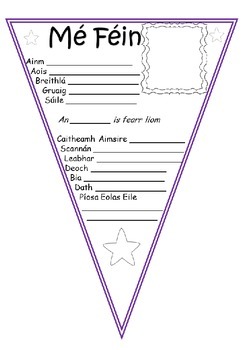
Mé Féin Bunting

This is a nice scríbhneoireacht activity to do in station teaching as it doesn't take too long and once the children know the language they should be able to do it almost independently. Again, I have differentiated versions available here

                                                    Bunting Mé Féin (Gaeilge)  Colour & Black/White

Draw the person/ éist, tarraing agus aimsigh an duine

This could be a nice éisteacht lesson. Read a description of a person to the children (cailín/buachaill, cén sort gruaig, dath na súile,  possibly include éadaí, and a badge with their age).
The children have to draw what they hear in the description and choose who they think it is in the classroom. Maybe it could also be a member of staff!

ICT Games/Cluichí Ríomhaire


These games are from one of the few Gaeilge sites that is very good and has some lovely interactive games. It has some differences in the words as it uses the Northern Irish dialect but is still a great resource to use.

Here are two games that link nicely to Mé Féin. Click on the images to be redirected to the website.


You could also download the Anseo Corp App onto the computers which has 6 games to revise the body parts. The clickable image will redirect you to where you can download it.


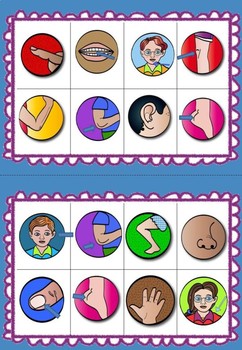
Bingo/Biongó

The children love Biongó. This is a set for the body parts (click on image to download resource). For the older children I make it more challenging by giving them two cards to mark. You can also make it more challenging for the child calling out the words by getting them to put it into a sentence e.g. Ghortaigh mé mo chos.

                                                   Biongó Na Baill Bheatha (Body Parts Bingo in Irish)

Thursday, 17 August 2017

Gaeilge Station Teaching (how it works in my room)


Last year, we decided to try team teaching and station teaching for Gaeilge. I have to admit I was a bit skeptical as to how it would work especially at the independent stations but the benefits were more than I ever expected. These are just a few of the advantages I found:

-development of Oral Language skills,  it gave the children a chance to USE the Gaeilge they already knew in a small group setting
-confidence boosting
-alternative from book (although I did base some stations on tasks similar to the book rather than totally reinventing the wheel!)
-amount of Gaeilge covered (I would never have covered the amount of material in one whole class lesson as I did at the stations)
-FUN for the children and teachers
-opportunity to work with small groups at their pace
Image result for i love gaeilge
Image Source

STRUCTURE


  • 1 session per week on a Thursday  (as children had opportunity to learn some of the language)
  • 4 stations
  • 10 minutes per station (manageable and they didn't get bored as time was short)
  • 2 teachers (this year I will be doing it by myself but it is great if you have another teacher)

Click on the image below to download free station labels.


Content of Stations

This varied each week but I always linked the content to the theme we were covering. Here are some of the stations I alternated between:

  • Labhairt (at least one station every week)

This station changed every week. A few of the activities we did were:
rólimirt, 
board games,  
poster discussion,  
dánta,
nuacht,
conversation flashcards
PE

  • Scríbhneoireacht

Some weeks children would practice their litriú for their scrúdú on Friday, write about a picture, put verbs into sentences etc. I usually used the whiteboards at this station so time wasn't wasted ruling copies.
I also worked on sentence structure with the children at this station. Even the older classes find it challenging to follow the correct structure of an Irish sentence. We used lots of flashcards and worked on forming sentences together.

  • Gramadach

I found it a really effective way to teach some grammar points and reinforce grammar already taught such as tenses and prepositions.

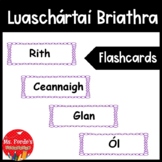
                                                       Luaschártaí Briathra  (Irish verb flashcards)

  • Éisteacht (usually alternate weeks)

Either using the éisteacht activities from the class book or reading instructions myself, I did éist agus tarrraing, éist agaus scríobh

  • Léitheoireacht

I often used texts from the book for this station as I didn't want to bombard my class with more and more texts-the book contains a large amount already. 

  • ICT (usually alternate weeks)

This was a great independent station, unfortunately there aren't many high quality Gaeilge websites. Check out http://www.nicurriculum.org.uk/snas_ar_sceal/ which has some great interactive games.


Resources


Our school did invest a lot in resources for the Gaeilge Station teaching. Here are some of the resources the school purchased.  Click on each image to be redirected to the website.

Image result for smarty cat chatty catImage result for smarty cat chatty cat

Junior Scrabble as Gaeilge                  Cártaí Comhrá trí Ghaeilge (Oráiste)

Find other Gaeilge ideas here:


Mé Féin Stations/Activities

Tuesday, 6 June 2017

Lighthouse Poetry & Art

A couple of times a year, I like to use a poem as inspiration for my Art lesson.
The Lighthouse by CJ Heck is a favourite of mine and the children really like it too.
This year, the children performed the poem after practicing it in groups during English Station Teaching. They added actions and some interesting props!
We then used the poem as our inspiration for two art lessons. The first was a clay lesson to create a lighthouse setting. After the clay dried, the children painted the lighthouses.


We also used pastels, wallpapers and crepe paper to create lighthouse scenes.


Monday, 13 March 2017

Literacy Stations Oral Language

In our school this year we have decided to do Literacy Stations in every class once a week. In my room, we do 4 x 20 minute stations. One of the stations we do each week is Oral Language.  All teachers have found it hugely beneficial as some children feel more confident speaking out in a smaller group setting rather than the full class. I have also found that they are more engaged and willing to speak out and it gives me the opportunity to listen to them more than a whole class setting often allows.

Here are a few examples of the types of activities we do during Oral Language.

1. Conversation Cards

Sometimes we use these for the full station and other times we use them to start off the 20 minute lesson.  The school purchased these ones from www.clevermindtoys.ie. They really get the children thinking and also encourage them to wait their turn and listen to others!
Image Source

There are also lots available online that can be easily printed and laminated. Click on the images below to be redirected to the resources.
                     
Image Source

2. Poetry            

I find this a really effective way to teach poetry as it can be difficult to always get around to it.  I usually pick a poem directly related to what theme I am teaching at the moment and recently we compared and contrasted two poems.      
Some activities we do include:

  • our likes/dislikes about the poem
  • the theme of the poem
  • draw a picture to visual what the poem is about
  • make connections to ourselves/other poems 
  • identify rhyming patterns
  • identify any alliteration, metaphors or similes

3. Discussion Questions

This is similar to the Conversation Cards except it is usually based on our theme or something topical. I usually assign a number to each child and we roll a dice. Whoever's number comes up picks a discussion card and we have a chat together about the issue. Over the past few months we used discussion cards to explore:

  • Internet safety
  • Friendship Week
  • Christmas Traditions around the World
  • Racism/discrimination  
Again, the ideas and thoughts that the children come up with as part of a small group never fail to surprise me!


4. Listening & Instructions Activities


I tried this out a few weeks ago as some children still find it difficult to listen to a simple set of instructions. 
First of all, I called out a set of instructions for the children to listen to and draw what they heard. I made it more challenging by not allowing them to ask any questions and I only said each instruction once.
Afterwards, we discussed the challenges including listening carefully and how some instructions were more vague than others.

Then it was the children's turn to pair up. One child had to describe a picture to while the other drew what they interpreted. 
I teach 4th and 5th and they found the exercise really interesting. Now I just have to transfer that to everyday teaching!!
Here are some types of images I used:
Image source

Image Source

5. Board Games


Not only does it encourage Oral Language skills, it also helps children to pay attention, wait their turn and work co-operatively together.  Our school invested in these board games but we also use the ones from our toy shelf.

Image source

Anyone have any other ideas they find useful or engaging for the children? Feel free to comment below.

Find more resources pinned on my Pinterest for Oral Language here.

Download free station teaching labels by clicking on the following image:
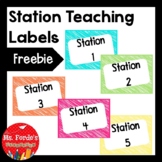
                                         Station Teaching Labels