Showing posts with label Maths. Show all posts

Wednesday, 7 October 2020

Maths Week Ideas

 As Maths week is next week, I have been putting together some resources to use with my 1st, 2nd and 3rd Class throughout the week.   Here are some of the activities we hope to do during the week.

Maths on the Move

I have already written a blog post on this where you can find a more detailed description.  We do this outdoors and incorporate it into PE. For each class I have copied a set of questions and answers onto card.  These are very versatile as they can also be used for matching games in the classroom. 


1st Class will focus on addition to 15, 2nd will use mental addition strategies and subtraction facts, while 3rd Class will focus on mental addition strategies and times tables.  For a single stream class, simply photocopy the same questions on different coloured paper for each team. When collecting the answers they can only take it is it is their team colour!

There are lots of variations to this game too. The winning team could be the first team with them all matched up or the first team to put them in correct order starting with the smallest. The students always love it from the junior end to the senior end!

Board Games

I ave also put together some board games for each of the classes to revise Maths concepts that we have covered over the past few weeks.  I have laminated the board game & roll and add/round game so each pair have two games.


Topmarks Games

We will be using some of the great interactive games on the Topmarks website too.

If you would like any of the games mentioned above, click on the photos below.


Tuesday, 15 October 2019

Maths on the Move

Since it is Maths Week, it is nice to do some fun Maths activities away from the book.  This activity can be done with any class level outdoors or in a hall (or even the classroom if you wish!).
Image Source

How I structure it:

1. Choose a Maths topic (e.g. addition facts, long multiplication)
2. Create question cards and matching answer cards.


3. Arrange your class into teams/pairs.
4. Hide the answer cards around the area you will be playing in (if outdoors I put them under cones so they don't blow away).
5. Give each team/pair their first question card.  Together, they work out the answer and then run to find the matching answer card, which they return to you.
6. Give them the next question card and see how many they can complete in a set amount of time or the team to complete a certain amount of them first wins.


Variations/Tips


  • Print the questions on different coloured pages (one colour per team) so that you can use the same questions with all teams.  Each team must find the answer card to the question card that matches their team colour (e.g. if the answer to my question is 10 and my team colour is orange, I can't take a 10 printed on a blue page back to my team, I must find the orange one!)  The first team to have completed all their question and found the matching cards wins.
  • Teams complete the question behind their cone and only one child from the group runs to find the answer each time.
  • Give one question to each team at a time rather than giving them all the questions together, which encourages them to work together to figure them out.
  • Give a sandwich bag to each group to gather their question and answer cards.
  • It facilitates differentiate, for example, one group could be doing long multiplication but another group may be doing short multiplication.


What can I use the game for?


It can literally be used for all Maths topics but ones that I have used it for include:
  • matching fractions and decimals
  • long multiplication (figure it out and find the answer)
  • matching analogue and digital time


Feel free to share other ideas below!

Wednesday, 28 August 2019

Maths Problem Solving

Problem Solving is probably the one area in Maths that is challenging for many students. 

Using a strategy to break down the problem can be helpful to students.  In our school, we use the 'RUDE' Approach to problem solving, which is outlined in the images below.


I have also made smaller desk topper versions for the children as a reference point.  It includes some mathematical language that often appears in problems, as well as a multiplication grid.


Some schools follow the 'CUBES' Approach. Display posters and a desk topper for this is also available, just click on each picture to be redirected to download.


I like to encourage the children to make a note of any useful mathematical language that will help them with problem solving in the future.  I usually put it inside their Maths book.  Click on the image to download it for free.


Monday, 4 February 2019

Mental Maths Lollipop Sticks

This year I am working in Special Education, helping some children with Maths.
I find the lollipop strategy useful to revise and consolidate topics that have been covered already.

How it works:

Each time we complete a topic, I write it on a lollipop stick and add it to the jar.
Each day at the start of our Maths session, the children pick one of the lollipop sticks.
I ask them 10 questions based on the topic.
The children try to figure them out mentally, but they sometimes use a mini whiteboard.  I also use visuals, if it supports the child. e.g. using dienes blocks for place value

Not only does it constantly revise what they have learned, which is beneficial for all children, it also shows me if we need to go back over a topic.  It is also a great way to revise the Maths language, as you can see in the sample questions below.

It could also be used a classroom just as easy.....give each child one question based on the topic or use mini whiteboards and they can all do the same 10 questions.

Here are some of the topics we have included to date.


(Time, Division, 2D Shapes, Lucky Dip*, Place Value, Fractions, Decimals & Percentages, Lines & Angles, Times Tables)

Lucky Dip*: I ask a random choice of questions from all the topics we have covered!

Here are a sample list of questions I ask the children in some of the topics.

Multiplication

What is 3 x 4?
What is the product of 5 and 6?
Can you think of the factors of 24?
7 times 7 is.....
Count in 5's up to 60
List the first 5 multiples of 6.

Fractions, Decimals and Percentages


What is half of 30?
What is 1/4 as a decimal?
Give an equivalent fraction for 1/5.
What is 50% of 10?
Write 4 2/4 as an improper fraction.


Target Number


Check out sample questions for that here.


Thursday, 29 November 2018

Magnetic Calendar


I bought this magnetic calendar in Smyths recently to use with some of the children I work with in. (This is NOT an ad, I purchased the product myself for under €20!) It comes with 82 magnets.

Personally, I am going to use with one particular child to develop a sense of time on a daily basis. There are lots of other ways you can integrate it into the classroom, particularly in the Infant level, or as a daily activity to do with an SNA or independently.  I have listed some ideas of how you can really get your moneys-worth with this resource! Feel free to add other ideas in the comments below.


Ordering the days/months of the year (Maths)

All of the months and days are provided and it would be a nice hands on activity to put them in order. You could separate the school days from the weekend. The months could be matched to the correct season. 
If the child is good at putting them in order, you could remove one of the magnetic days/months and see if they can figure out which one is missing.

These magnetic tiles could also be used instead of writing answers, if fine motor skills is an issue.


Oral Language


There is such scope for oral language development with this resource. As the children become used to it, it could be used as a stimulus for recording a child being a weather forecaster. The child could also be recorded saying their news using the activities as a prompt. This would be particularly nice for children who have an iPad, as it creates a nice link with home, when they can see these videos.
It provides some lovely opportunities for vocabulary and language development, even the temperature monitor has a range of words to describe the weather. 

Writing

If you wish, it could be a visual cue for a writing activity as it provides a lot of the language for the children. I really like to used it on the book creator apps on the iPad, incorporating I.T. The children can take photos of the calendar when they have it completed and write a sentence or two underneath. They can also record this sentence using the microphone on the iPad (more Oral Language).

Image result for book creator app

Maths

The digit tiles can be used in so many ways for maths as an alternative to writing. Here are just a few ways I use them:


  • ordering numbers smallest to largest or largest to smallest
  • making a number that teacher calls out
  • the number before/the number after
  • addition/subtraction sums
  • reading numbers, 1, 2, 3 or 4 digit numbers


Emotions/Feelings (SPHE)

I really like the emoji faces that are included and they can be used to discuss feelings/emotions with the children. There is a spare one that the children can add other emotions. They could also draw their own 'happy' or 'sad' faces. Using these they could create sentences (orally, using I.T. or writing), such as I am happy when.........

Visual Timetable


The calendar includes lots of extra curricular activities but you can always add your own and use the 'Activities' part as a visual timetable for the child.


Whiteboard

The second part can be used as a whiteboard, if you lift off the clear film that holds the supplementary magnets. This is really useful for a child who finds it difficult to copy material from the board, as they can use the information on the daily calendar to write on the board underneath. I would put it on their table, but you could leave it hanging on the wall too.


Wednesday, 20 September 2017

Jenga Blocks in the Classroom

I purchased this set of Jenga blocks for only €4 in Tesco's last week.

I try to have a few games on each set, to get extra value for money! For example I have multiplication on one side of the blocks and a division set on the other.
Here are a few ways I like to use them in station teaching or as an early finisher activity.

 Maths

  • Multiplication and division tables (useful to leave a multiplication square at the station so they can check answers)
  • Addition and Subtraction tables for younger classes
  • Fractions: 1/4 of 20
  • Percentages: 30% of 10
  • Decimals: 0.1 of 20
  • Number Sequences or patterns: 12, ____, 14 or 3,6,9, ____
  • Rounding numbers to nearest 10, 100, 1000

Gaeilge

Write the root of the verbs on the blocks and the children can change the verb to one of the following:
  • Aimsir Chaite
  • Aimsir Láithreach
  • Aimsir Fháistineach
  • Question form/negative of verb


English

  • Prefix/Suffix
Add a prefix/suffix to each block and the children have to give a word that contains the prefix or suffix

  • Phonics 
Put letters and letter blends (e.g. th) on the blocks and the children have to say a word with that letter sound


  • Conversation Starters (Oral Language)
Image result for conversation jenga
Image Source


Ways to play

Remove one piece at a time and keep it of you get the answer correct. When the tower collapses, whoever has the most blocks is the winner.

OR

Place each piece on top after you answer the question. Use a whiteboard or paper to record correct answers.

Feel free to add other ideas for using Jenga blocks in the comments below.

Tuesday, 22 August 2017

5 printable resources for First Day Back (all Freebies!)


Here are five sheets I will have printed for my first day or two back in the classroom.


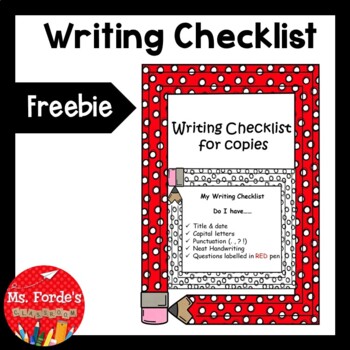
1. Checklist Page for Homework Diary


I print this out each year and get the children to attach it to the inside cover of their homework diary. It does take some training in getting them to use it, but it does give them clear expectations on what you expect from homework.
You an download it here.
Writing Checklist for Copies FREEBIE

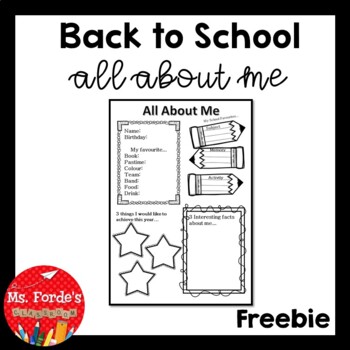
All About Me Sheet


Free Back to School Info Sheet
A nice way to get to know the children on the first day back. Other ideas of Back to School Activities can be found in another post by clicking here. Click on the image to download it for free.

Mental Maths Sheet

I stick this into the back of their mental maths book.  During the first few weeks back to school, we add key maths language for addition, subtraction etc. as we come across them in our book. This can be used as an aid for the children as the year progresses. Children can also add in their own facts and maths language that they find tricky. You an download this freebie  here.

                                                 Maths Language Template

Bookmarks

I print these on card to make them a bit more durable. The children can decorate them and the idea is each time they complete a book they record the name of it on the bookmark, seeing their collection grow (hopefully!) as the year progresses.

                                Bookmark (record books read)

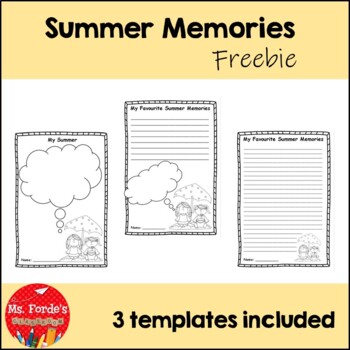
Summer Memories Worksheet

This is another freebie that is differentiated and can be used in all class levels. It is useful as an oral language activity,  to revise recount writing and to see the starting point for each child. I sometimes bind them altogether and make our first class book of the year. Click on the image to download 3 different options.

                                               Summer Memories Freebie (Back to School Activity)

If you find these useful, please rate them on my TPT store! :)

Find other Back to School Posts here:

First Day Back to School Activities


Sunday, 11 September 2016

Maths Station Teaching Ideas

This post is about how I structure and plan Maths Stations for my class.

There are many reasons why I feel station teaching is hugely beneficial to the children. These are just a few:
-more child led than teacher led
-allows me to work with smaller groups and give them more reinforcement or challenge them further
-peer learning 
-a chance to tackle problem solving 
-makes Maths FUN
-chance to use concrete materials 
-ICT can be integrated easily
Image Source

Structure:

Once per week (in an ideal world but not always the case.)
Two Teachers
It is a lot easier to have a second teacher (usually a Learning Support Teacher) to help you but I have done it myself too.
3 x 10 min slot: 
This year I am hoping to do 3 x 10 minute slots on a Friday. (With the emphasis on the Language Curriculum this year, it is hard to find more time to allocate) In the past, I have spent up to 1 hour at station teaching.

Planning

Grouping

This can be mixed ability or by ability depending on your preference and your class.
 This year I have 5 groups of 4/5 children in each.

Stations

I have six stations organised that the children will work at over a two week period (3 per week). Again these change a bit depending on the topic but here is an idea of how I break it up:

1. Teacher Led (Class Teacher)

The children work with me on a topic we are currently working on such as steps to long division. It gives me a chance to see if the children have any difficulties or if they are ready to move on.

2.  ICT

Using iPads/classroom computer, I will set out 2/3 games on a particular website for the children to try. It will be linked to the topic we are covering or developing tables. In September we will be using www.crackingmaths.ie 


3. Card games

This month we will practice multiplication and place value using cards.

4. Problem Solving

Our school invested in these Maths Boxes (4 levels) a few years ago. It also comes with a CD so you can put them on the IWB. 
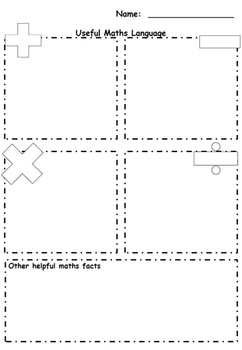
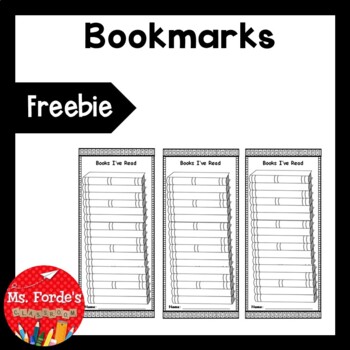
Image Source

5. Maths Boardgame

Again, we invested in these board games to reinforce maths skills in a fun way.

Image Source

6. Teacher Led (Learning Support) 

The Learning Support Teacher will also work with groups so that each week the children work at a teacher led station and two independent stations.

Monday, 5 September 2016

Maths Starters The Students Love

Here are a few ideas of games I often start Maths lessons with to reinforce Maths skills.
Last year, I introduced these game when we were doing place value in September but they continually asked to play them throughout the year!
Image Source

Digit Bingo

I find it is a very useful way to recap on Maths vocabulary they have learned (factors/product etc.) and develop place value skills.

I usually hand out the whiteboards to the children and ask them to write down a four digit number (can increase or decrease the amount of digits depending on the class level). Sometimes we just do it in our copies if under time constraints. I then read out a list of clues and they mark off their numbers until someone has all of them marked off.


Examples of questions:

-If you have an even/odd number in the thousands mark it off.
-If you have the product of ___, in the tens mark it off.
-If you have a multiple of ___, in the hundreds mark it off.
-If you have the answer to 3x3......
-If you have 3 squared.....
-If you have the second square number....

(As I read out clues, I write down the possible answers on my grid to check their answer at the end.)

Alternative Ways to Play

-use it to develop a sense of tenths/hundredths/thousandths.
-if you have a split class, both classes can compete against each other 
-allow the winner to call out the clues for the rest of the class (which allows you to observe and see which clues/vocabulary the children are still finding challenging).

The Target Number

This is also a great game to revise vocabulary and to develop maths skills.

Again, I usually use the whiteboards for this activity but the copies also work perfectly.
I call out a four/five digit number for the children to take down and I give them 10 questions based on the number.

Examples of questions

-Make the largest/smallest four digit number from the digits
-is it odd or even?
-will it divide by 2/3/5? (They begin to know without even doing a calculation as the year progresses when they learn strategies such as any even number will divide by 2, if you add the digits and the answer is a multiple of 3, then 3 divides into it etc.)
-add all of the digits
-find a prime/composite digit
-find a square/triangular number
-list the digits that are a multiple of __
-Add 2000 to the number
-subtract 1200 from the number
-round it to the nearest 10/100/1000


Alternative Ways to Play

-allow the winner to call out the questions for the rest of the class (which allows you to observe and see which clues/vocabulary the children are still finding challenging).

Saturday, 21 May 2016

End of Year Activities...keeping them busy!!

It's almost that time of year again when most of the curriculum is covered and the feeling of holidays is in the air! It can be a long last month though to keep the children occupied and on task.
I have put together a few activities that might be useful for those last few weeks of the year.

1. Maths Murder Mystery

This is a nice group activity that also recaps on many maths strands from the year. the children figure out the Maths clues to eliminate suspects of the crime. If they follow the steps correctly they should be able to identify the killer! You can download them from Primary Resources by clicking here.

2. Display Ideas

It is always nice to ask the children what they really enjoyed during the year and what stood out for them. Here are a few ways to record their year in your class.

Image Source
Image Source
This is a freebie from my Teachers Pay Teachers store that you can download here. There is also another sheet with it entitled 'My star moments this year'.
Image Source

3. Writing Activities (Irish)

I have used this with the senior classes to summarise their highlights from the school year. It is a useful way to recap on tenses and sentence structure. It can be used with younger classes too by using the differentiated worksheet.

Click here to download the resource.


4. Writing Activities (English)


Image Source

Last year, we used these task cards in the last few weeks of school. I pulled out a name and they chose a number and were assigned that task card. We did short writing sessions (10-15 mins) and they read each others work after wards. They really enjoyed reading each others memories. Click on the picture above to download them.

Here is another free set to download (click on picture to download):
Image Source

Please feel free to comment or link other ideas below :)