Showing posts with label Science. Show all posts

Tuesday, 7 November 2017

3, 2, 1...Blast Off! (Science Rockets)

Science Week is fast approaching and this year I am going to do something very similar to last year as the children really enjoyed it.

I had attended an excellent science course during the summer and got lots of new experiments and ideas. So last year, I decided to use rockets as my theme for science week.

Click here to download


Each day we constructed a different type of rocket so by Friday we had made 5 different rockets.

  • Mouse rocket
  • Straw rocket
  • Balloon rocket
  • Foam rocket
  • Fizzy rocket


I had 4th and 5th class last year so they also guided the younger classes to make some of the rockets once they had learned to do it. Two senior children worked with two children in the junior room to help them make the straw and mouse rocket. My class loved being the 'teachers'!

We also had rocket launches and races outside which the children really loved. It was one of my favourite science lessons as a teacher as all the children were excited to get involved and they had rockets to bring home at the end of the week.

I have put together a pack which contains detailed outlines of how to make the different rockets, prompt questions to challenge the children and get them thinking, an ideas page to integrate it with other subject areas as well as activity sheets for the children.

Just click on the image below to download it!


Happy Science Week everyone!

Here is a nice video that explains rocket launches and landings for children!


Tuesday, 24 October 2017

Books Worth a Look #3 'The City of Ember'


This is the third post in Books Worth a Look. (I have purchased these books myself and do not receive sponsorship/freebies for reviewing them!)


Next up is 'The City of Ember' by Jeanne DuPrau. It has been made into a movie aswell so it could be a good one to read with the children and then compare and contrast the film.


I had never come across this book before until the summer when I ordered it online. I feel it is most suitable for the senior end of the school. (It is important to note that the main character has lost her parents and also loses her grandmother during the story).


Theme/Overview
The book is set in the fictional city of Ember which has been built to be self sufficient from any outside world. However, the city is now running out of supplies and the generator is having more and more failures as the city is plunged into darkness repeatedly.  People are becoming more anxious about the future. The main characters need to try and find an escape route to see what lies beyond the city boundaries.

Activities

  • Science: explore Electricity and how it works

Check out http://www.primaryscience.ie/ for experiments based on Electricity.

This link has some videos that are worth a look.
http://www.primaryscience.ie/activities_activity_movies.php

Discuss ways to conserve electricity and different ways to generate electricity.

Explore the different sources of light, both natural and artificial.

  • Art: create city scapes of buildings.

I really like these ones make using newspaper.


Skyline
Image Source

  • Visualisation: This book would be good to challenge children to visualise it in their heads and illustrate it. They could contrast 'the City of Ember' and the land they arrive in.

  • Get creative and plan their own city (Maths and Art). In groups they could construct a city using a variety of materials

  • Pack your bags! Discuss what treasured belongings you would bring if you had to move to a new home.


Check out the other Books Worth a Look posts:

Monday, 9 October 2017

Fun with the 5 Senses

This month in Science my class were learning about the five senses. Here are some of the activities we did based on the Senses, which I spread over a few lessons.

  • Structure of the sense organs
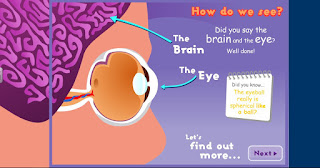
The interactive lessons provided by the Children's University  of Manchester are brilliant. I used some of the lessons on the senses to teach the children about the different parts of the eye etc.

Image source

Experiments/Activities

Eye

Which is your dominant eye?

Where is your blind spot?

Hearing

Identify the sound

Smell

What's that smell?

Taste

Blind tasting with and without the sense of smell

Touch

  • Feely bag (make it trickier by putting a sock or glove on their hand or use different parts of the body to feel the object to show that our sense of touch is less sensitive on our arm than our finger tips etc. )
  • Trace a message on an arm (and guess what they traced)
  • Finger prints (chat about how each finger print is individual)

 Find this experiment and more by clicking here.

Sense poetry

I gave a different setting to each child. They had to use the formation of a sense poem to describe the setting without mentioning it. The rest of the class had to guess the setting.
Examples: farmyard, seaside, woods, school, cinema, restaurant


  • Discussion/appreciation of not having use of one of your senses

For example, we looked at how Braille is used for those who are visually impaired.

Thursday, 5 October 2017

Building Project

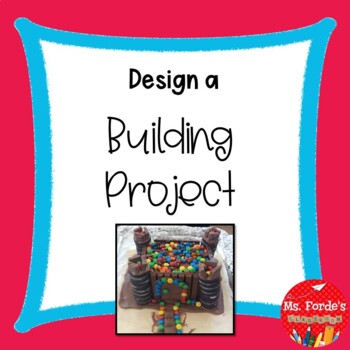
Following on from the students' enthusiasm and engagement with the 'Bridges Project' last year, we did a 'Building Project' this year.

I did it in a similar way to the bridge project. First of all, we looked at different types of buildings all around the world and how they have changed over the years.

Then we looked at the types of materials that are used and why (for example why we use blocks in Ireland compared to mud huts in Africa).

We also looked at famous buildings around the world to give the children some inspiration and ideas.

The children then had to complete their project booklet and construct a building of their own!
                                         Make a Building project (STEM Project)

Take a look at a few of the finished projects.


The students presented them to the whole school after presenting them to the class.

Integration Ideas


Science: Materials (and how they can be used in construction)
Art: Construction
English: Oral Language, Procedural Writing
Geography: Homes Around the World
History: Change of Buildings over time (contrast photos of your locality: now versus long ago)
SPHE: Differences

Other Project Ideas:


Bridge Project

Tuesday, 17 November 2015

Bridges Project

I previously posted on my Facebook page about a project my students carried out this year on bridges.  I have outlined below how it ties into the curriculum and scope for integration. The project comprised of both a research booklet (available on my TpT store) and making their own bridge following studying Bridges in Science.


Theme: Transportation/Overseas Adventures

Subject: Science
Strand(s): Materials/Energy and Forces
Strand Unit: Properties and characteristics of materials/Forces


Brief overview of Lesson:


-Show children a range of bridges (from locality/famous bridges)
-Discuss the various functions of bridges and the types of bridges
-Investigate through experimentation the strength of various bridges (arch, plank, walled & corrugated). Record results as a class and compare. (Equipment-jenga blocks or similar as bridge wall, dominoes or counting cues, ruler to measure distance between blocks, paper to make arch/wall etc.)


Integration:

English: Oral Language, Procedural Writing based on experiment
Art: Construction of bridges
Maths: Measurement, lines & angles, weight
ICT: researching various bridges

Then the children completed their own project on bridges. Have a look at some of the finished products below!


Tuesday, 8 September 2015

1916 Easter Rising Book Review


I just received this book from Poolbeg, which I plan on using this academic year for the 100th Anniversary of the Easter Rising.  It is a nice way to extend their knowledge of the Rising in Ireland at the time through the diary of a twelve year old girl living in Dublin.  It is a well written book with many snippets of humour to engage the students and the topic will probably engage even the most reluctant reader! It is certainly worth investing in a few copies for your class library or doing collectively as a class novel.

I would recommend the book for a good 5th class or 6th Class as the vocabulary is quite challenging. It could also be used with 1st years in Secondary School. Included in the book are a list of useful links and resources to explore the Easter Rising further.  It also has a useful glossary of groups and individuals involved in the Rising.

It has huge scope for integration with many subjects areas. I have listed a few ideas below.

English: 

-Diary Entries from the perspective of other characters in the story
-Create newspaper articles during the week of the Rising.
-Book Review of the Novel
-Persuasive Writing (E.g. The Irish were right to fight for their independence)

Drama:

-Create improvisations based on the characters in the book
-Use of conscience alleys to help the characters make difficult decisions
-Hot seat characters from the book and ask them a variety of questions
-Thought track characters from the story at different times throughout novel

History:

-1916 Rising
-World War I in Europe
-Historical Figures (Pearse, Connolly etc.)
-Compare Dublin now and then
-Create a timeline of the events of the Easter Rising

Geography:

-Mapwork based on landmarks mentioned in the story
-Scoilnet maps to identify landmarks from story
-Dublin City (Ireland)

Art:

-Design a new front cover for the book
-Choose your favourite scene from the book and draw it
-create a movie reel of the main scenes from the book

Science:

-Inventor Thomas Edison (is mentioned in the story)

Music:

-learn words to Amhrán na bhFiann
-learn tin whistle tune to Amhrán na bhFiann

Project Work

-Assign a specific aspect of the Rising for the children to research
Examples include:
*Research a person involved in the 1916 Rising
*Research the landmarks involved in the 1916 Rising
*Write a different ending to the story
*Write a review of the book
*Write a letter to the author outlining your recommendations (likes/dislikes of the story)

Monday, 24 August 2015

All things Irish.... (September Thematic Planning)

Each month I choose a theme to teach the children. I find that it really helps me with time management, learning becomes more meaningful and connected for the children and it gives you time to explore a topic in depth.

For September, I usually choose a theme relating to Ireland. This year is fits in even better as the Rugby World Cup is on!

I have uploaded an outline of my thematic planning for free here is you want to download it. 

Here is a brief outline of ways to integrate 'All Things Irish' (or choose another suitable heading) for your class.

English

  • Study an Irish poet (e.g. The Lake Isle of Inisfree by W.B. Yeats)
  • Read an excerpt from 'Under the Hawthorn Tree' by Marita Conlon McKenna (It has excerpts in the Wonderland series if anyone uses these text books)
  • Write a set of interview questions for an Irish author/sportsperson

Gaeilge

  • Mé Féin
  • learn words to Amhrán na bhFiann
  • Caitheamh Aimsire (a perfect time to do more about All-Ireland Final & Rugby World Cup)

History


Geography

Science

  • Learn about my Skeleton

Music

  • Learn Amhrán na bhFiann
  • Learn tin whistle notes to Amhrán na bhFiann
  • Learn Ireland's Call

Drama

Depending on the SESE you do, it could be linked to

  • Irish myths & Legends
  • GAA match commentary

Art

  • Draw your impression of the Lake Isle of Inisfree using pastels
  • Self Portrait (could use Picasso as stimulus although not Irish!)
  • Design a Class or County Jersey (Download the template here)
  • Make a clay model of an Irish landmark/symbol (e.g. Dublin Spire)
  • Create a wall frieze of an Irish Legend 

PE

Now would be a great time to introduce the children to Touch Rugby or develop their hurling/Gaelic Football skills

Project Work


Feel free to comment more ideas below!